21 Sep 2026
Car Protection Film vs Ceramic Coating: Which Is Better?
Your car's paint faces more than sunlight and dust. Stone chips can damage and cause defects in the front bumper. Road debris can leave marks on the bonnet. Bird droppings and other contaminants can affect the surface untreated. And, even your regular washing can create fine marks over time.
This actually raises an important concern about opting for car protection films or ceramic coating. What should you choose?
In the piece, we will create a dependable comparison of car protection films vs ceramic coating. And by the end of this blog, you will be able to make an informed decision. Car Protection Film vs Ceramic Coating: What Is the Difference?
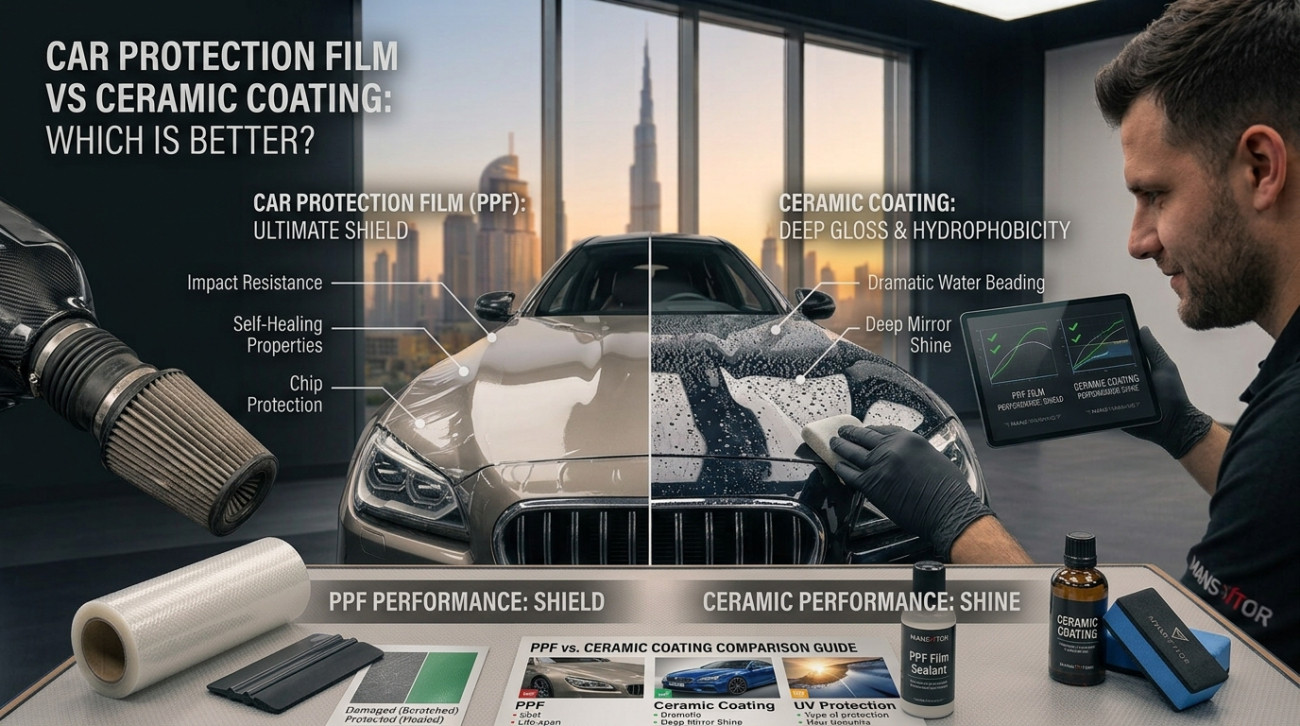
The biggest difference is how each product protects your paint.
Car protection film, also known as PPF, is a transparent film applied over painted surfaces. It creates a physical barrier between your paint and external hazards.
Ceramic coating is a liquid coating that bonds to the vehicle's surface. It creates a protective layer that helps repel water and contaminants while enhancing the paint's finish.
Neither solution is designed to do everything.
|
Protection Need |
Car Protection Film |
Ceramic Coating |
|
Stone chips |
Excellent |
Limited |
|
Road debris |
Excellent |
Limited |
|
Light physical scratches |
Strong |
Limited |
|
Water repellency |
Moderate |
Excellent |
|
Easier washing |
Good |
Excellent |
|
Gloss enhancement |
Good |
Excellent |
|
Chemical contaminant resistance |
Good |
Strong |
|
Impact protection |
Excellent |
Limited |
The key distinction is simple: PPF protects against physical damage, while ceramic coating protects and improves the surface.
How Does Car Protection Film Protect Paint?
PPF works as a sacrificial layer over the original paint.
When small stones or road debris strike a protected panel, the film takes on much of the impact rather than the painted surface.
A quality car protection film can help protect against:
-
Stone chips
-
Road debris
-
Minor scratches
-
Light scuffs
-
Bug impacts
-
Sand and road abrasion
This makes PPF particularly useful in high-impact areas such as the front bumper, bonnet, front fenders, mirrors, and headlights.
Some modern films also feature self-healing properties. These can help reduce the appearance of certain light surface marks when the film is exposed to sufficient heat.
When Should You Choose PPF?
Choose PPF when physical paint damage is your biggest concern.
It makes particular sense for:
-
New vehicles
-
Luxury cars
-
Performance cars
-
Daily highway drivers
-
Cars frequently exposed to road debris
-
Owners who want to preserve factory paint
If preventing stone chips is the priority, ceramic coating cannot provide the same type of physical barrier.
How Does Ceramic Coating Protect Paint?
Ceramic coating takes a distinct approach. Instead of just adding a physical film, the coating bonds to the paint and creates proactive surfaces.
One of the top benefits of hydrophobicity. This helps water to move across the surface more easily, while dust and tiny contaminants are easy to remove when washing.
Ceramic coating can also help with:
-
Water repellency
-
Easier maintenance
-
Surface contaminant resistance
-
Gloss enhancement
-
UV exposure management
-
Reduced dirt adhesion
However, ceramic coating should not be confused with a physical shield.
It can improve surface protection, but it is not designed to stop stone chips or absorb significant impact.
Which Protects Against Stone Chips Better?
Car protection film wins. Stone chips create concentrated physical impacts. A film provides a sacrificial layer between the impact and the paint.
Ceramic coating does not provide the same physical thickness or impact absorption.
If you regularly drive on highways or roads with loose debris, PPF offers a more suitable form of protection.
For maximum coverage, you can protect the most exposed panels rather than applying film to every painted surface.
Which Is Better for Scratches?
The answer depends on the type of scratch.
PPF is better suited to light physical contact and surface abrasion because the film creates a protective barrier.
Ceramic coating can make the surface more resistant to certain light marks and easier to maintain, but it should not be marketed as scratch proof.
A sharp object or significant contact can still damage a ceramic coated surface.
So if scratch prevention is your main goal, PPF provides the stronger physical defense.
Which Is Better for Dubai's Climate?
Dubai car deals with the intense hot weather, sunlight, heat, dust, sand, and road debris. This actually creates conditions to make both protection methods useful, but for different reasons.
PPF does sound more valuable when your concern is physical damage from road debris and abrasion. Ceramic coating on the other hand is more useful when you are looking to opt for more beneficial and hydrophobic surface.
Your driving habits should therefore influence the decision.
-
Frequent highway driving: PPF has the advantage.
-
Frequent washing and surface maintenance: Ceramic coating has the advantage.
-
Maximum exterior protection: Combining both can make more sense.
Can You Use PPF and Ceramic Coating Together?
Yes. In many cases, using both provides broader protection than choosing only one.
PPF can be installed on high-impact areas first. A compatible ceramic coating can then be applied to the appropriate surfaces, including compatible PPF.
The two products serve different purposes:
-
PPF: Physical protection against impacts, chips, and abrasion.
-
Ceramic coating: Hydrophobic protection, easier maintenance, and enhanced surface appearance.
This combination is particularly useful when preserving a new or high value vehicle matters.
A Practical Protection Setup
You could use PPF on:
-
Front bumper
-
Bonnet
-
Front fenders
-
Side mirrors
-
Headlights
-
Other high impact areas
Ceramic coating can then provide additional surface protection across the vehicle, subject to product compatibility and professional recommendations.
Is PPF More Expensive Than Ceramic Coating?
The cost depends on several factors. Coverage is one of the biggest variables. A partial PPF installation will generally require less material and labor than full vehicle coverage.
Pricing can also vary based on:
-
Vehicle size
-
Film quality
-
Coverage area
-
Installation complexity
-
Paint condition
-
Surface preparation
-
Installer experience
Ceramic coating pricing also varies according to the coating system, preparation requirements, vehicle condition, and application process.
Instead of comparing only the initial price, consider what damage you are trying to prevent.
A cheaper coating is not necessarily better value if your main concern is stone chips.
Car Protection Film vs Ceramic Coating: Which Should You Choose?
Use your primary concern as the deciding factor.
Choose PPF if you want:
-
Stronger protection against stone chips
-
Protection from road debris
-
A physical barrier over the paint
-
Protection for high impact areas
-
Greater focus on preserving original paint
Choose ceramic coating if you want:
-
Strong water repellency
-
Easier exterior cleaning
-
Enhanced gloss
-
Better resistance to surface contaminants
-
A cleaner looking finish between washes
Choose both if you want broader protection.
The combination gives you physical protection where impacts are most likely and surface protection across the vehicle.
Protect Your Paint Based on How You Drive
There is no single winner for every vehicle. If your biggest concern is physical paint damage, car protection film is the stronger solution. If your priority is hydrophobic performance, easier cleaning, and surface enhancement, ceramic coating is the better fit.
For drivers who want a more complete protection strategy, PPF and ceramic coating can work together.
The important step is choosing the right coverage and having the product professionally installed. Good preparation and correct application can make a major difference in the final result.
Key Takeaways
-
PPF provides stronger physical protection against stone chips, road debris, and abrasion.
-
Ceramic coating improves surface protection, water repellency, gloss, and maintenance.
-
Using PPF with ceramic coating can provide broader protection when both physical damage and surface maintenance matter.
If your car regularly faces Dubai roads, dust, heat, and highway debris, assess the areas most exposed to damage before choosing your protection package.
Protect your paint before everyday driving turns small risks into expensive repairs.
FAQs
Is car protection film better than ceramic coating?
For physical paint protection, yes. PPF provides a physical barrier that can help protect against stone chips, road debris, and light abrasion. Ceramic coating focuses more on surface protection, water repellency, easier cleaning, and appearance.
Can ceramic coating prevent stone chips?
No. Ceramic coating is not designed to absorb stone impacts. It can provide surface protection, but it does not offer the same physical barrier as PPF. If preventing stone chips is your priority, car protection film is the more suitable option.
If ceramic coating could be applied over PPF? Yes. Ceramic coating is compatible with few films. Putting a suitable coating over PPF could add some hydrophobic qualities and provide you with better protected and glossy surface.
Is PPF worth it for a new car?
PPF can be worthwhile for a new car when preserving the original paint is important. Applying film to high impact areas can help reduce the risk of stone chips and other road damage before those marks occur.