16 Nov 2026
In the UAE, a tyre is considered unsafe five years after its production date, even if the tread still looks fine. You can find that date in the four-digit DOT code on the sidewall: “2421” means week 24 of 2021. Beyond age, the two biggest causes of tyre failure on UAE roads are wrong pressure and poor wheel alignment. Here is how to check all three.
Why tyres age faster in the Gulf
Rubber contains oils and compounds that keep it flexible. Heat and UV light break those compounds down. Road surface temperatures in Dubai can pass 70°C in summer, so tyres here harden and crack sooner than in mild climates.
An aged tyre can look perfectly normal. The danger is inside: the bond between the rubber and the steel belts weakens, and at high speed on a hot motorway the tyre can separate or burst. UAE police regularly name tyre bursts as a cause of serious accidents, especially in summer.
How to read the DOT date on your tyre
Look for the letters “DOT” on the sidewall, followed by a string of characters. The last four digits are the production date:
- First two digits: week of manufacture (01–52)
- Last two digits: year of manufacture
So “DOT XXXX XXXX 1823” means week 18 of 2023. That tyre should be replaced by week 18 of 2028 at the latest.
Always check the date when buying new tyres, too. A “new” tyre that has sat in a warehouse for two years has already used up part of its life.
Tyre pressure in summer heat
Air expands when it gets hot. A tyre set to 35 psi on a cool morning can read several psi higher after an hour on the highway. That leads many drivers to make a common mistake: letting air out when the tyre is hot. Once it cools, the tyre is under-inflated.
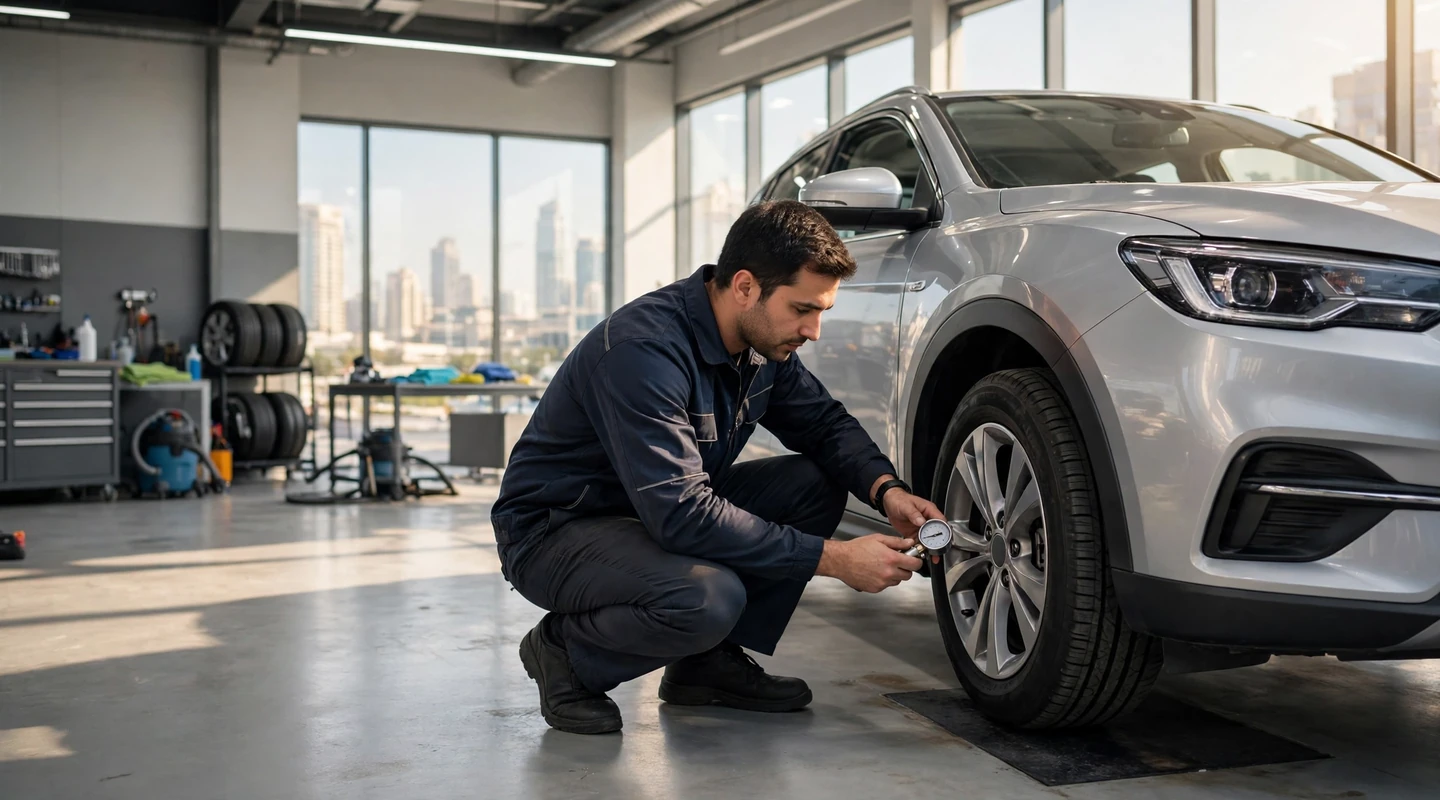
Under-inflation is dangerous because the sidewall flexes more, builds up heat, and can fail. Follow these rules:
- Use the pressure printed on the label inside the driver’s door, not the maximum on the tyre.
- Check pressure when tyres are cold, ideally in the morning.
- Check at least every two weeks, and before any long drive.
- Do not forget the spare.
Signs you need wheel alignment
Alignment sets the angles of your wheels so they point straight and sit flat on the road. Potholes, speed bumps, kerbs, and worn suspension parts all knock it out over time. Watch for:
- The car pulling to one side on a straight road
- A steering wheel that is off-centre when driving straight
- Uneven wear on the inside or outside edge of the tyre
- Squealing tyres on gentle turns
Poor alignment can wear out a new set of tyres in a fraction of their normal life. It also makes the car less stable at speed.
Alignment vs balancing: what is the difference?
These two services are often confused.
| Service | What it fixes | Common symptom |
|---|---|---|
| Wheel alignment | Angle of the wheels | Pulling, uneven tyre wear |
| Wheel balancing | Weight distribution around the wheel | Steering wheel vibration at speed |
Balancing should be done every time a tyre is fitted or swapped. Alignment should be checked about once a year, after hitting a big pothole or kerb, and whenever new tyres are fitted.
Other tyre checks worth doing
- Tread depth: replace tyres before the tread reaches the wear indicators. More tread means better grip in rare but dangerous UAE rain.
- Sidewall damage: bulges, cuts, and cracks mean the tyre must be replaced.
- Matching tyres: keep the same brand and model on each axle.
- Rim condition: a bent or cracked rim can cause slow leaks and vibration.
If your alloys are scuffed from kerbs, our wheel rim restoration service can repair the damage and restore the finish.
Fines and inspection
Worn, damaged, or expired tyres can lead to a traffic fine and black points, and they will fail the annual registration test. More importantly, they put you and other drivers at risk.
Tyre fitting and alignment at Al Emad Auto
Our tyre fitting, balancing, and alignment service uses computerized equipment to set your wheels to the manufacturer’s specification. We check tyre dates, pressure, and wear on every car that comes in, and we will tell you plainly whether a tyre still has life left. Visit us in Al Quoz Industrial Area 4 or book a pickup.
Frequently Asked Questions
1. How long are tyres valid in the UAE?
Tyres should be replaced within five years of their production date, regardless of tread depth.
2. How do I check the age of my tyres?
Read the last four digits of the DOT code on the sidewall: week then year of manufacture.
3. What tyre pressure should I use in summer?
Use the pressure on the label inside the driver’s door, measured when the tyres are cold.
4. Should I let air out of my tyres when it is hot?
No. Hot pressure readings are normally higher. Letting air out leaves the tyre under-inflated once it cools.
5. How often should I get a wheel alignment in Dubai?
About once a year, and after hitting a kerb or pothole or fitting new tyres.
6. Why is my steering wheel vibrating?
Unbalanced wheels are the most common cause. A bent rim or worn suspension can also cause it.
7. Can I buy a new tyre that was made two years ago?
It is legal, but it has already used part of its five-year life. Ask for recent stock.
8. Is it safe to mix tyre brands?
Keep the same brand and model on each axle for balanced grip and handling.
9. Do expired tyres fail the RTA test?
Yes. Tyres that are expired, worn, or damaged can cause a car to fail inspection.
10. How long does wheel alignment take?
About 30 to 60 minutes for most cars.